

Two Things Can Be True
The Creator Economy Is the Future of Work // Most Creators Will Never Earn Minimum Wage From It
I have a confession to make before we get into this one.
I built a social agency. I knocked it down. And I am currently sitting in the exact career crisis this piece is about — trying to figure out whether my future is in the industry I have spent years inside, or whether it’s time to walk into the casino and pull the lever.
I still have fractional clients. I’m still doing the work I know how to do, building out marketing departments, helping brands figure out who they are and how to talk to people. But I’m also doing this — writing, creating, putting my thinking out into the world — because somewhere in the back of my mind I’ve started to wonder if the thing I’m helping other people build is actually the thing I should be building for myself.
Which makes me an extremely unreliable narrator for this piece. Or possibly the most reliable one.
You decide.
Two Things Are True Right Now
Thing One: The creator economy is one of the fastest-growing industries in the world. It is currently valued at $234 billion. Brands now allocate up to 25% of their digital marketing budgets directly to creators. Creator ad spend is growing at four times the rate of the overall media industry. The influencer marketing sector alone is on track to hit $34 billion in 2026. The money is real. The opportunity is real.
Thing Two: 73% of creators earn less than $30,000 a year. The median creator income is $3,000 annually — and it declined between 2023 and 2025, while the market boomed. The top 1% of creators receive 21% of all ad payments. The top 10% receive 62%.
Both of these things are true. And they are true because of each other.
What’s Happening to the Old Industry
Let me give you some numbers from the world I came from first, because context matters here.
The traditional advertising industry is not quietly restructuring. It is — to quote the trade press directly — holding “a funeral for advertising.”
Since 2024: IPG has laid off thousands. Omnicom has laid off thousands more. P&G cut 7,000 roles. Between August and December 2024, the American ad industry lost 4,600 roles. Job openings in advertising and marketing fell 7.5% between 2022 and 2025. The holding companies that have dominated the industry for decades are consolidating, automating, and cutting — in that order.
And where is that budget going? To creators. The same brand dollars that used to pay a full creative team’s salaries now pay a creator’s sponsorship fee. The transaction is real. The redistribution is happening.
On paper, this sounds like a revolution. The little guys winning. The monolithic agencies finally getting what they deserve. The creative class taking back the means of production.
On paper.
The Casino
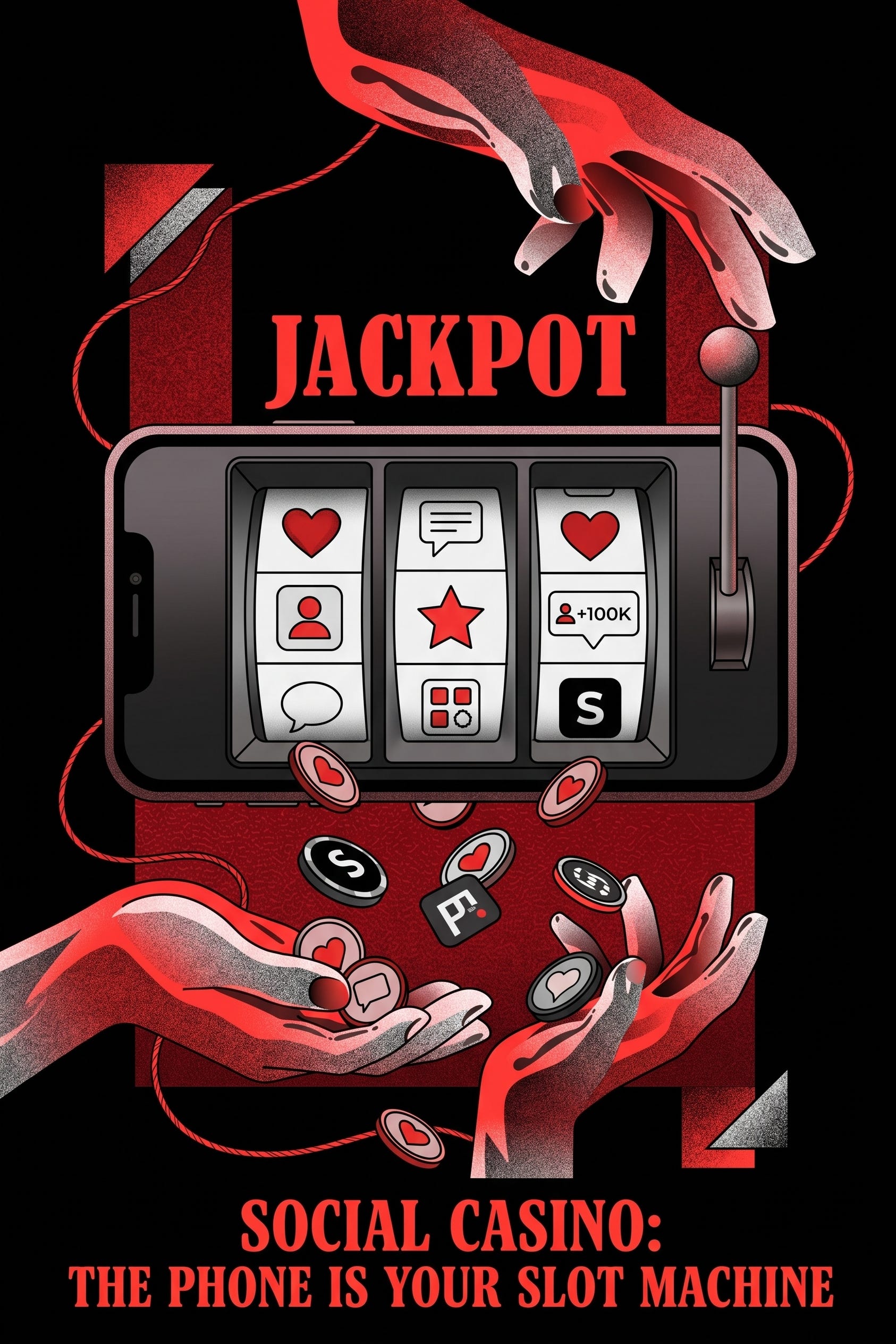
Here’s what nobody in the creator economy wants to say out loud: the platforms are, functionally, casinos.
Every creator showing up consistently, posting into the void, chasing the algorithm — is pulling a lever on a slot machine. Some will win big. Most will walk away empty-handed after years of trying. A tiny few hit the jackpot and become the story everyone else points to as proof it’s possible — because that story is essential to keeping everyone else playing.
But the house — Instagram, TikTok, YouTube — always wins. It doesn’t matter whether you make it or not. Your content, your data, your audience, your attention, and your hope are all value flowing upward to the platform, regardless of what flows back down to you. They need you to believe you are one viral post away, because the moment you stop believing, you stop producing — and the machine stops running.
The dream isn’t a side effect of the creator economy. The dream is the product.
This is why the median creator income has fallen while the market size has grown. The money is real. It’s just not going to most of the people creating the content that makes the platforms valuable enough for brands to spend it.

You Can’t Be Made Redundant (But You Can Be Deleted)
Here’s the thing that the “become a creator” conversation usually offers as its killer argument: you can’t be made redundant from your own audience.
And that’s true. Your boss can’t call you in on a Friday afternoon. No holding company can restructure you out of existence. No client conflict can end your contract.
But the algorithm can demonetise you overnight. A platform update can halve your reach with no warning and no appeal process. A single controversy — deserved or not — can unravel years of work in 48 hours. Your account can be suspended. Your account can be deleted. The platform can simply change what kind of content it wants to reward, and if you built your identity around the old version, you start again.
You don’t have a boss. You have an algorithm. And the algorithm doesn’t offer severance.
The difference between employment and platform dependency is not as large as the creator economy would like you to think. You’ve just traded one form of precocity for another — one with better aesthetics and worse labour protections.
Who Actually Makes It
There’s a truth running underneath all of this that I find both uncomfortable and clarifying, because I can see it from where I’m sitting.
The people who tend to break through in the creator economy are not, by and large, people who emerged from nowhere. They are people who already had something: skills developed inside the industry they’re now disrupting. Networks built over years of doing the work. Financial runway — savings, a partner’s income, client work on the side — that allowed them to build an audience before the audience paid anything back.
Emma Chamberlain’s runway wasn’t family money. It was being 16 and living at home — which is its own form of financial insulation that most adults contemplating the same leap simply don’t have.
The creator economy dismantled the gatekeepers of the old industry. But the skills, connections, and stability required to succeed in it? Still flows disproportionately to the people the old industry already trained.
The revolution redistributed the format. It did not redistribute the advantage.
I say this as someone who is quite consciously using the decade I spent inside marketing to inform the content I’m creating outside it. I am not outside this observation. I am a data point in it.

Where That Leaves Me (And Maybe You)
I am sitting in a strange place right now. I still have clients. I’m still the person helping brands think through how to build, what to say, who to say it to. That work funds the time I need to figure out whether I can build something for myself — whether my thinking is interesting enough, consistent enough, me enough, to build an audience around.
Which means I am simultaneously: the person helping brands understand the creator economy, and the person tentatively walking into the casino, chip in hand, wondering whether to play.
I think a lot of people in marketing and advertising are in this exact moment and not saying it out loud. The industry is changing fast enough that staying still feels risky, but the creator economy is not the sure thing it’s being sold as. The ground between those two positions is uncomfortable. There’s no map for it.
What I keep coming back to is this: the creator economy is genuinely worth something to the people who approach it with honesty — about what they actually think, what they actually know, and what they actually can’t see yet. The content that tends to cut through isn’t polished performance. It’s the specific perspective that nobody else has, shared without too much dressing.
Which might be the most reassuring thing I can say — and also, I’m aware, the thing every casino tells you about why your particular hand is worth betting on.
What I Know For Sure
The money is moving from the old industry to the new one. That’s real and it’s not reversing.
Most people playing the creator game will not make a living from it. That’s also real and also not reversing.
The platforms extract value from everyone, winners and losers alike. The algorithm is not your friend. You are building on land you do not own.
And the people best positioned to navigate all of this are the ones who can see the system clearly enough to make an honest decision about where to place their chips — rather than the ones who got swept up in the dream without reading the odds.
Two things can be true. The casino is real. The house always wins. And sometimes, knowing that, you still decide to play.
I’m still deciding.
Further Reading & Sources
On the creator economy and income inequality:
Creator Economy Statistics 2026 — inBeat Agency — comprehensive data
Creator Economy Income Distribution — Archive.com — the distribution breakdown
On the advertising industry’s collapse:
Next up: The creator economy gave real people a seat at the table. Now the house is building AI influencers to replace them.