

A few weeks ago I wrote about the social casino. The argument was simple. The platforms are slot machines, creators are pulling the lever, and the house always wins. I ended it with a promise: next time, I’d write about the house building AI influencers to replace the players.
I got one thing wrong.
It isn’t the house.

Last week I watched a man in a houndstooth suit shadowbox in front of the Eiffel Tower.
Blonde bob. Handlebar moustache, curled at the ends. Bow tie. Not a flicker of expression. He threw a few silent jabs at nothing, the caption said “she call me night she call you cabbage patch”, and the video ended. I watched it again. Obviously.
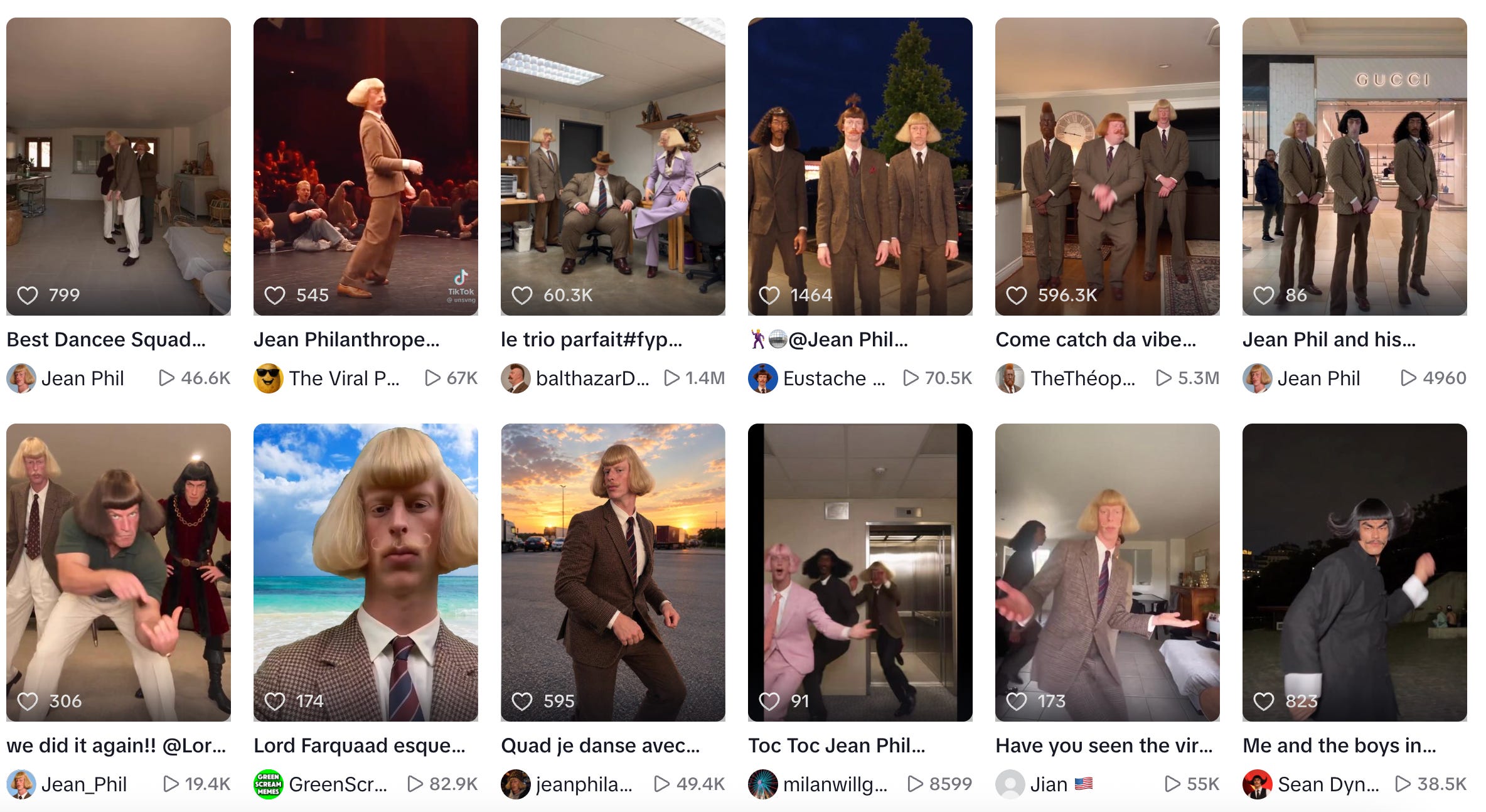
By the next morning my feed was him. Jean Philanthrope in a café. ‘Jean Phil’ in a gallery. Jean Phil under a tree in a Paris park. And then a second man, an Englishman called Archibald Brown, who apparently wanted to fight him.
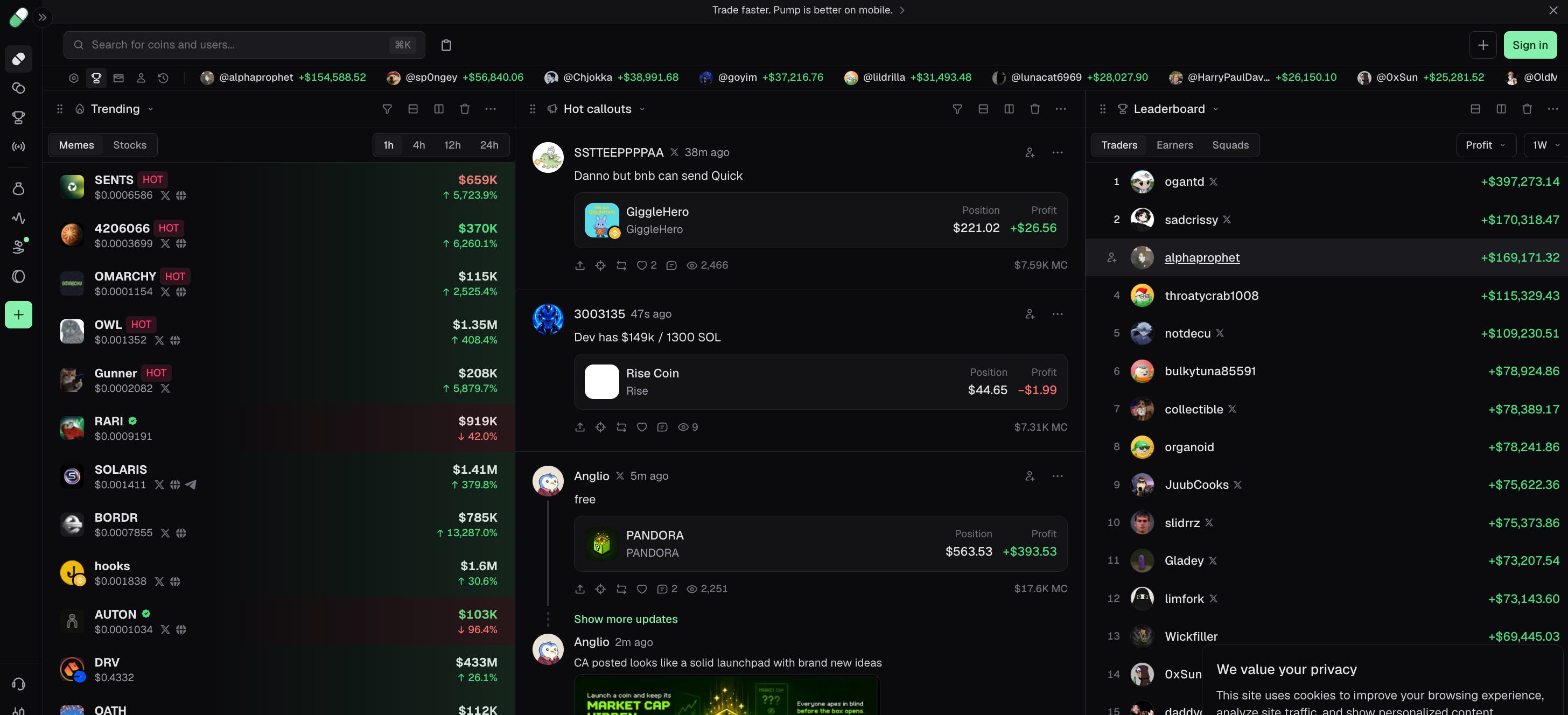
It took me about three hours to go from “who is this AI guy?” to “why is he everywhere?” to the link in his bio, and the realisation that I’d been watching a pump and dump take over social and media (media had done no research when sharing it but that is a whole other topic of convo, I digress).
Then the full picture came into focus, and it was worse than a scam. It was efficient.
For a decade, the creator economy has run on a chain of conversions. Attention became followers, followers became a media kit, and the media kit eventually became brand deals. Each link in that chain took a cut, and each one took time. Whoever built Jean Phil (and ‘friends’) has simply removed the chain. There’s no brand, no product, no audience to nurture, not even a person. The attention is the asset, and it trades on pump fun by the minute.
And the two feed each other. Every view sends someone to the coin. Every jump in the coin’s price gives the internet a new reason to talk about him, and every conversation brings more views. The content is the engine.
This is where ten years of chasing virality was always going to end. We spent a decade telling ourselves views would turn into value one day. Someone figured out jumping straight to “one day.”
Two Things Are True Right Now
Thing One: Jean Phil is one of the most effective pieces of character content I’ve seen all year. A repeatable visual joke, instantly recognisable, absurd enough to rewatch and simple enough to remix because no one ‘owns it’. He went from his first post on 17 September to more than 228,000 Instagram followers and tens of millions of TikTok views in under two weeks. One video alone passed 35 million views. If a brand had briefed that, the agency would already be framing the case study.
Thing Two: Jean Phil doesn’t exist. He’s AI-generated. Three days after his first video, an X account appeared promoting “the official JEANPHIL Solana token”, linked straight from his Instagram bio. The coin climbed to a reported value of around $12 million. On 21 September it lost roughly 99% of its value in a single day.
Both of these things are true. And, once again, they’re true because of each other.
Two Slot Machines, Stacked
Here’s how I’ve come to understand it.
In the casino I wrote about last time, there’s one machine. You post, the algorithm decides, you win or you don’t.
Jean Phil runs on two.
The first machine is the feed. You make a character, you post, and the algorithm decides whether he travels. Most don’t. But you only need one to pop off. And now that it is possible at scale to products thousands of videos and accounts at once, the chances of one ‘popping off’ becoming much higher and easier to attain.
The second machine is the coin. It lives on a platform called pump.fun, on the Solana blockchain, where anyone can launch a token in about a minute for almost nothing. The price runs on an automatic curve, so every purchase makes the next one more expensive. Get enough people buying and the coin “graduates” onto a proper exchange, with charts and trading bots and all the theatre of a real market.
The character is the chip you put into the first machine to win a pull on the second.
And AI makes the chips nearly free. You don’t have to bet on one character. You can make ten. Jean, Archibald, a Jade, a Nigel, a Derek: all of them have turned up in the same orbit, several with coins of their own. Most barely registered. Archibald’s coin passed $1 million and now sits more than 90% below its peak.
So Who Actually Gets Paid?
This was the question I couldn’t let go of, so I went and found out.
Whoever launches the coin. They can buy in the first seconds, at the very bottom of the curve, before anyone else knows the coin exists. Then they can sell into the wave of buyers the videos send. On top of that, pump.fun pays a coin’s creator a cut of every single trade, buys and sells, of up to nearly 1% on smaller coins. A crash is still trading. Trading still pays.
(For the record, on the day of the crash the Jean Phil account posted that it had sold no tokens and that anyone could check the creator’s wallet on-chain. That may well be true of that wallet. The fees get paid either way...)
The snipers. Bots that buy automatically the moment a coin appears. When Archibald’s coin launched, one crypto alert account flagged it to traders when it was about eight minutes old. Earlier this year, CoinDesk reported on a sniper who turned $285 into $627,000 in a single day on a viral coin, while regular buyers lost out.
The insiders and promoters. People who know a launch is coming, or are paid in tokens to talk about it, and then sell to their own audiences. Now i’ve seen the pattern, I can’t un see it, and a lot of very strange content pillars are now making a lot more sense to me (perhaps more on that in another article).
A handful of lucky early buyers. They become the story, and every casino needs a jackpot story.
The houses. Pump.fun takes 1% of every trade on the curve whether the coin lives or dies, and it has made more than $800 million doing so. Instagram and TikTok collect tens of millions of views of engagement. Neither needs anyone to get rich. They get paid either way.
And who loses? The people who arrive late. Which, as it happens, is exactly when the algorithm is showing them the character most.
How a Pump and Dump Actually Works
I want to be careful here, because “pump and dump” gets thrown around a lot. So I’ll just describe the pattern and let you decide what to call it.
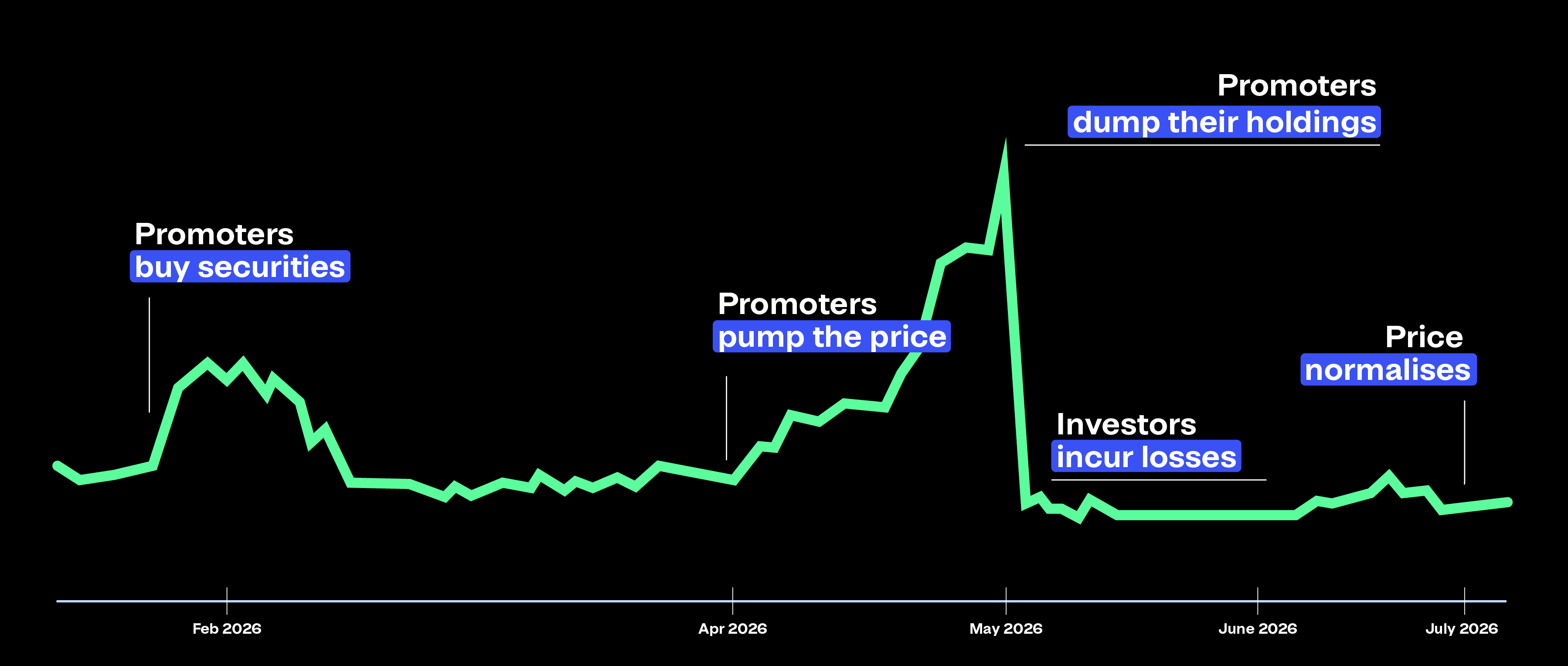
Someone creates a coin and buys a big chunk of it, cheaply and early.
Then comes the pump, which is attention. Viral videos. An “official coin” link in a bio. A promotional account tweeting six times on launch day. New buyers pile in, and every purchase pushes the price further up the curve. Rising numbers attract more buyers, each one betting there’ll be someone after them willing to pay more.
Then the dump. The people who bought cheap sell into the crowd. Because they hold so much and paid so little, their selling collapses the price, and the late arrivals are left holding tokens worth a fraction of what they paid.
What makes it a pump and dump, rather than just a bad investment, is that the people doing the promoting are the people who bought first. They aren’t hyping the coin so it’ll succeed. They’re hyping it so there’s a crowd of buyers to sell to. Every new buyer is someone they can offload their own tokens onto. So the marketing isn’t selling a product. It’s building their way out.
Crypto people have a name for those late buyers: exit liquidity.
Next round you introduce a rival. Or you get “the gang back together”. A fresh character, a fresh coin, another spin.
Across the platform, the numbers are brutal. An analysis by Solidus Labs found that 98.6% of tokens launched on pump.fun showed signs of rug pulls or fraudulent trading. Only around 3% of people trading there have ever made more than $1,000.
If that last number sounds familiar, it should. The median creator in the creator economy earns about $3,000 a year. It’s a different casino with the same odds.
The Algorithm Is the Accelerant
What struck me most wasn’t the coin. It was how fast my feed changed.
One full watch of one strange video, and within twelve hours this whole cast of characters was all I was seeing. Feeds like TikTok’s For You page and Instagram Reels don’t much care who you follow. They care what you watch, and how many times you watch it. A ten-second loop of a man silently punching the air in Paris is practically engineered to be rewatched.
For a coin that needs attention to peak within hours rather than weeks, that is perfect. The algorithm squeezes the hype into exactly the window the trade needs. And because my feed was saturated, it felt like everyone was talking about him. That feeling, the sense that everyone’s in on this, is precisely the feeling that makes people buy.
Except everyone wasn’t. My feed was. Yours might never have seen him once. Personalisation makes a narrow thing feel universal.
It’s a casino with no clocks and no windows, and the machine you were playing follows you home.
Even the Media Picked It Up
I ran social across fifteen luxury titles, so I know exactly how this happens. A social desk sees something trending, the numbers are enormous, the character is charming, and there’s pressure to be on it now. You post first and ask questions later. Or not at all.
Over the past fortnight I’ve watched media outlets, including ones I respect, pick these characters up as a fun viral moment before anyone realised what they were actually for. Nobody set out to promote a coin. But every “who is this mysterious Frenchman?” post pointed more people towards an account with a token in its bio.
I’m not pointing fingers. I’ve sat in that seat. But it’s the clearest proof I’ve found of something I keep coming back to. Social didn’t just become media. Now media is being gamed by social. The people whose job is to check are being fed the same hype, by the same algorithm, and rewarded by the same traffic for not checking.
The Influencer Doesn’t Have to Exist
The promise of the creator economy was: be yourself. Show up. Build something real with the people who follow you.
Jean Phil is that promise turned inside out. As fitness creator Colin Smith put it while watching all this unfold: “You just don’t even have to exist on the internet… make your quick hundred grand, get off, fly into the sunset.”
This is where everything I wrote in The Casino was heading, and the shift is easy to miss.
In The Casino, creators were the gamblers. They put in time, money and energy, the algorithm decided whether they got paid, and most of them didn’t. The platform won regardless.
With Jean Phil, the person behind the character has stopped gambling. AI makes characters almost free, so a flop costs next to nothing. When one does go viral, they make money from the coin whether it rises or crashes.The risk hasn’t gone away. It’s moved. The people now putting real money in and hoping to win are the audience, the ones buying the coin.
So the creator has switched sides. They’re no longer a player. They’re making money from the players, the way the house does.
One anonymous account now does what used to take a studio, a distributor and a bank. Production, distribution and finance, all collapsed into a man in a houndstooth suit, punching the air.
So Who’s Winning?
There’s one more player I haven’t mentioned, and it might be the smartest one at the table.
After all this, the AI video company Higgsfield posted on X: “Officially, every viral AI influencer was made on Higgsfield.” Then the pitch: make one with your face or from scratch, then “jump on viral trends with Genjutsu.” The credit underneath went to the Jean Phil account.
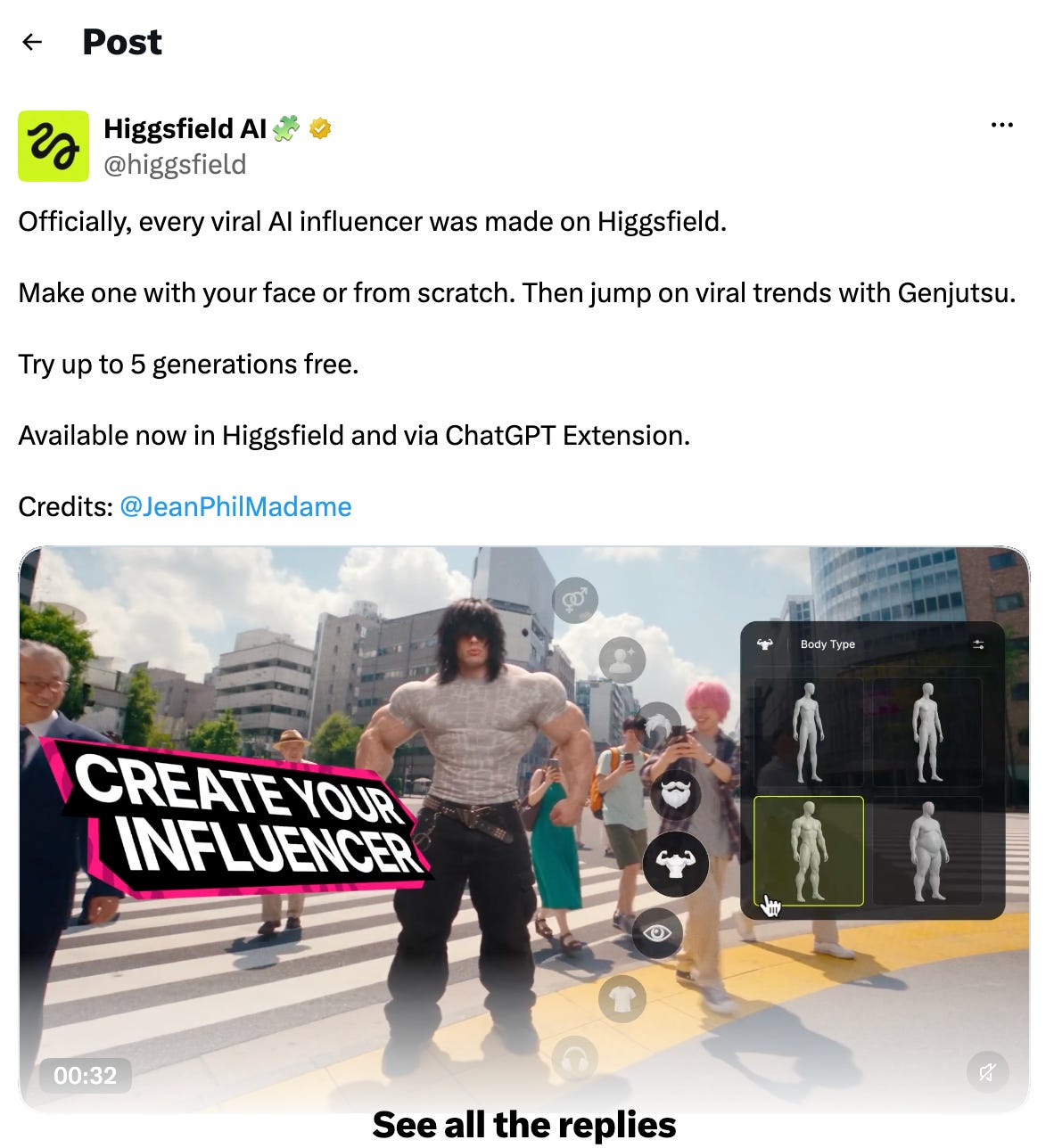
If you haven’t come across Genjutsu, it takes an existing video, keeps the movement, the camera and the timing, and rebuilds everything else around your character. Its sister tool, Recast, does the simpler version: upload any video and a photo, and it swaps the person in the clip for whoever you’ve uploaded. Put plainly, the quickest way to make a viral AI character isn’t to invent anything. You take something that has already gone viral, a dance or a skit or a walk that a real person filmed and timed and sweated over, and you put a new face on it. That might also explain why Jean Phil and Archibald sometimes move in perfect sync.
And once you know the tools are marketing themselves through the content, you start looking at every “trend” a little differently. Who started it? Who benefits when a million people join in?
So who owns any of it? Nobody really knows. The person who made the original video rarely holds any meaningful right over twenty seconds of themselves on a phone screen. In the US, work made purely by AI can’t be copyrighted at all. The platforms’ rules were written for a world where a person posted a video of themselves. Law moves in years, and this moves in hours. By the time anyone decides whether a Frenchman who doesn’t exist can borrow your choreography, he’ll have had his three weeks, the coin will have crashed, and the account will have changed its name again.
So who’s winning?
The tool, which sells the shovels and then puts the gold rush in its advert. The bank, a launchpad that takes its cut of every trade whether the coin goes up or down. And the platform, which gets the views ‘real or no real’. None of the three needs anyone to get rich, and none of them carries any of the risk.
Then there’s everyone else. The creators whose videos get recast. The brands paying real people to make real things. Anyone who still believes the deal was be yourself, show up, build something. We’re all working very hard to make an honest living, in a casino where the house now sells the chips, lends you the money and owns the machines.
What I Know For Sure
AI characters are going to be one of the most creative formats on social, and some of what’s being made right now is brilliant.
But when something is suddenly everywhere, overnight, with a link in the bio, the first question isn’t “who is he?”
It’s “who’s selling?”
Two things can be true. He doesn’t exist. The money does.
Further Reading & Sources
On Jean Phil and the characters:
Jean Philanthrope, the viral sensation with a $12M crypto behind it — Cointribune
Dark truth behind mysterious influencer Jean Phil — LADbible
On pump.fun and how memecoins work:
98% of pump.fun tokens flagged as scams (Solidus Labs) — BeInCrypto
Just 3% of pump.fun traders have made over $1,000 — The Defiant
A crypto sniper turned $285 into $627,000 in a day — CoinDesk
On the tools and copyright:
Part of the Two Things Can Be True series, exploring the contradictions that define how we live and work now.
Previously: The Social Casino